Logo image of the KunstHausWien

Loading

History

The KunstHausWien was created in 1991 from a former furniture factory: the building was remodelled according to Hundertwasser's designs and opened as a museum for his work and international temporary exhibitions. It houses the world's only permanent museum exhibition on Hundertwasser and also sees itself as an exhibition centre that combines art and ecology and seeks to address the major issues of our time.

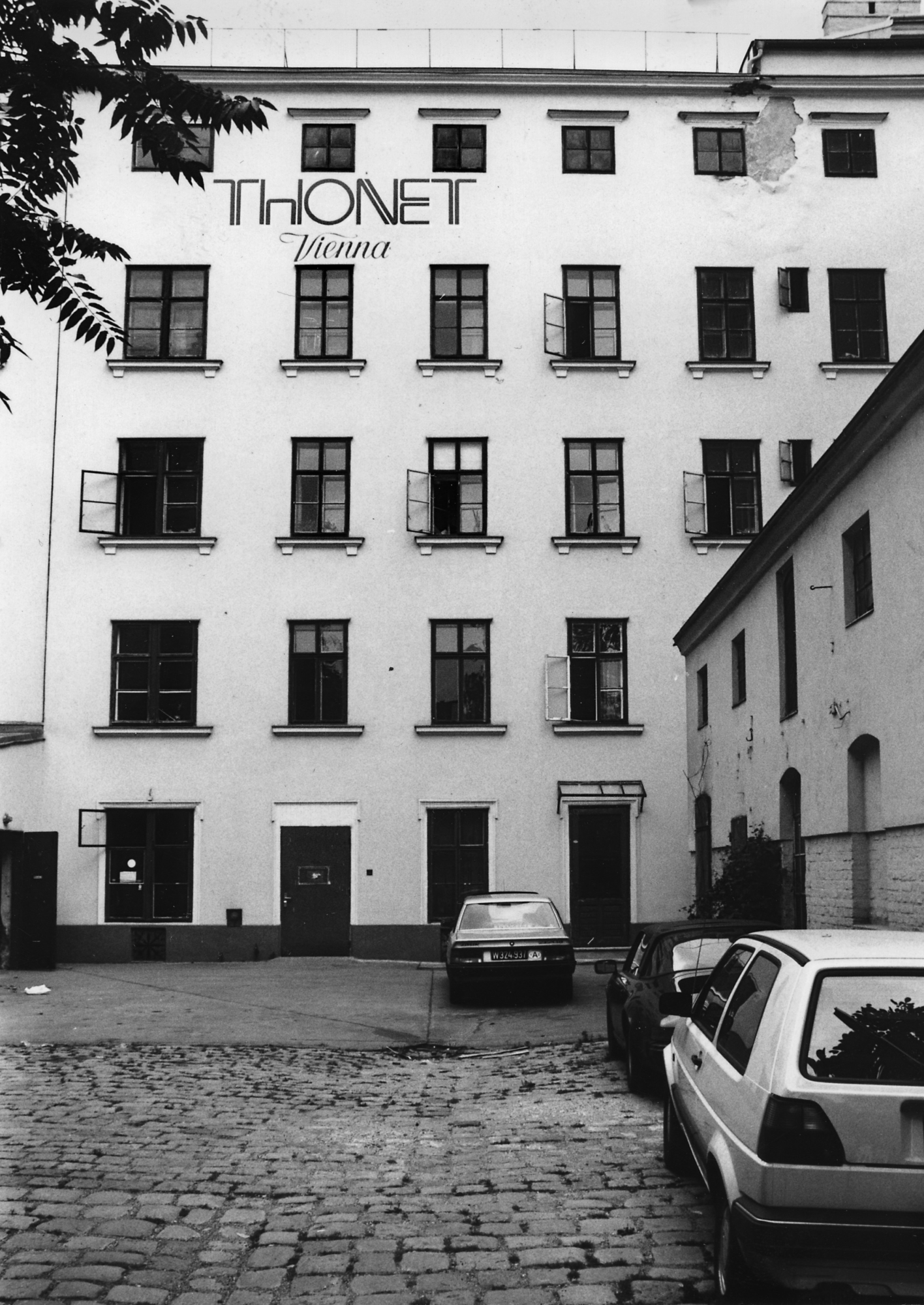
For the permanent exhibition of Hundertwasser's work, the buildings of the former furniture factory of the Thonet brothers (1892) in Vienna's 3rd district were chosen, which offered space not only for a permanent exhibition of Hundertwasser's work, but also for international temporary exhibitions. Between 1989 and 1991, architect Peter Pelikan realised the conversion, sensitively integrating Hundertwasser's visionary ideas into the existing building fabric. The result was a light-flooded porch facing the street and a striking staircase in the inner courtyard, which, together with the exhibition rooms, make the KunstHausWien a walk-in Gesamtkunstwerk in which architecture, art and philosophy merge harmoniously. The museum opened its doors on 9 April 1991 and was privately run until 2008, when it became one of four museums managed by Wien Holding.

Throughout his life, Hundertwasser was intensively concerned with the relationship between man and nature, but also with the connection between art and nature. His work reflects this commitment in many different ways: in his architecture, which is more compatible with nature and people, in his commitment to environmental protection, in socio-political statements in manifestos and through public demonstrations and creative actions with which he drew attention to the ecological dimension of human life.

This attitude still characterises KunstHausWien today: it sees itself as a place that combines art and ecology and addresses the pressing challenges of our time - from environmental and climate protection to sustainability and a more conscious life in harmony with nature. The aim is to conserve resources, return territories to nature, incorporate nature into urban development, promote sensory experiences of nature and support social commitment to a sustainable future.

The award as the first Green Museum in 2018 is a logical consequence of this philosophy, and the Vienna Climate Biennale, which has been organised by KunstHausWien since 2024, is a logical continuation of this commitment.

Facts and figures

1 April 1991
Opening of the KunstHausWien. Museum Hundertwasser on the Weißgerberlände after two years of remodelling the buildings erected for the Thonet brothers in 1892.

1 October 2007
Takeover of KunstHausWien by Wien Holding and integration into the cultural cluster of Wien Holding. This currently includes the Vereinigte Bühnen Wien (with the venues Theater an der Wien, Raimund Theater and Ronacher), the Wiener Stadthalle, Mozarthaus Vienna, the Haus der Musik and the Jewish Museum. All companies in the cultural cluster together attract over 3.5 million visitors per year.

2007-2014 Management Dr Franz Patay
2014-2022 Management Bettina Leidl
since 2022 Management Gerlinde Riedl, MA

2015
Content repositioning as a ‘green museum’ and opening of new exhibition spaces

Since 1991
90 temporary exhibitions by renowned international artists. These include artists who have written photography history, such as Cecil Beaton, René Burri, David LaChapelle, Annie Leibovitz, Robert Mapplethorpe, Man Ray, Herb Ritts and Henri Cartier-Bresson. Most recently, the focus was placed on contemporary photographers such as Rinko Kawauchi, Joel Meyerowitz, Peter Piller, Anita Witek, Edson Chagas, Martin Parr and Nasan Tur.
3.5 million visitors
 

Awards

2011
Winner of the Austrian Museum Prize 2011 from the Federal Ministry of Education, Arts and Culture. The prize was awarded in the ‘Preservation’ category for the comprehensive preservation of the original furnishings created by Friedensreich Hundertwasser and the original overall ensemble.

2015 / 2016
Awarded the Ökö Business Plan of the City of Vienna

2018
KunstHausWien is the first museum to be awarded the Austrian Ecolabel. 2022 The recertification took place.

2023/2024
With respect for Hundertwasser's unique architecture, the KunstHausWien devoted itself to the urgently needed refurbishment of the building in 2023/24. At the centre of the work was the introduction of hydrothermal energy, i.e. the use of groundwater heat to generate energy, and thus the extensive phasing out of CO2-producing energy sources and the 100% elimination of gas. By switching to a sustainable hydrothermal energy supply, a 75% reduction in energy consumption was achieved compared to the original air-conditioned area.

Beyond the actual energy savings, the symbolic power of the measures within the cultural organisation, within Wien Holding, to which the museum belongs, and far beyond is significant. The KunstHausWien - a building that was founded as a model for the interaction of art, people and nature - has brought its vision into the present and positioned itself as a pioneer for a forward-looking energy supply.
Funded by the European Union - NextGenerationEU and Climate Energy Fund
 

KunstHausWien is a company of Wien Holding and is funded by the City of Vienna's Department of Cultural Affairs (MA 7).
 

With the KunstHausWien newsletter you will receive current museum news, invitations to openings and events, as well as information about our educational programs.